








 There’s something about winter that magnifies everything when you have small children. The house feels smaller, the days feel longer, and the sickness never ends. Even the most easygoing mom can feel overwhelmed and stretched thin.
This winter, I could feel it in myself; I was shorter, more reactive, and more overwhelmed than I wanted to be.
I’m generally less structured and more go-with-the-flow, but I realized we were living in survival mode and something had to change. I felt like I was running around in circles meeting everyone’s needs, while also cleaning up the same messes over and over, and it was wearing me out.

I’ve read enough parenting books to know that my kids are looking to me for leadership and the meltdowns were showing me that they were begging for some structure. So I’ve worked on implementing a few small routines into our days.
I worked from anchors we already had in place: mealtimes and nap-time.
1. Morning and Evening Checklists
This has been one of the biggest game-changers. I ordered simple, customizable morning and evening checklists from Amazon and put everything on them: eat breakfast, get dressed, brush teeth, put shoes on, etc. Instead of me narrating every next step (“Did you brush your teeth? Go put your shoes on. Please go put your shoes on.”), the list gives them direction.
The kids love sliding the tabs over when they complete something. It gives them ownership and reduces my repeating myself. I didn’t realize how much mental energy I was spending directing every small task a million times, until I stopped. In the evening, they do usual nighttime care tasks, help clean up the playroom, and set out clothes for the next day. The checklist keeps the bedtime routine focused so the child negotiators don’t derail the bedtime activities.
2. A Protected Hour at the Gym
Every morning we go to the gym. The kids go to childcare, and I work out. That hour has become non-negotiable. It gives me a pocket of alone time and a needed pump of endorphins before the day really begins. I’m a better mom when I’ve moved my body.
We’re fortunate that we can walk from our house, so it doubles as fresh air and morning light. Even that short walk shifts everyone’s mood. It’s not about chasing fitness goals. It’s about starting the day feeling good.
3. Daily Physical Activity (No Matter the Weather)
Little kids need to move. Especially toddler boys (iykyk!!). Ideally, this looks like a neighborhood walk, time in the backyard, or bike laps in the cul-de-sac. It’s amazing how long they can keep moving and their stamina proves the point that they need to do it. 
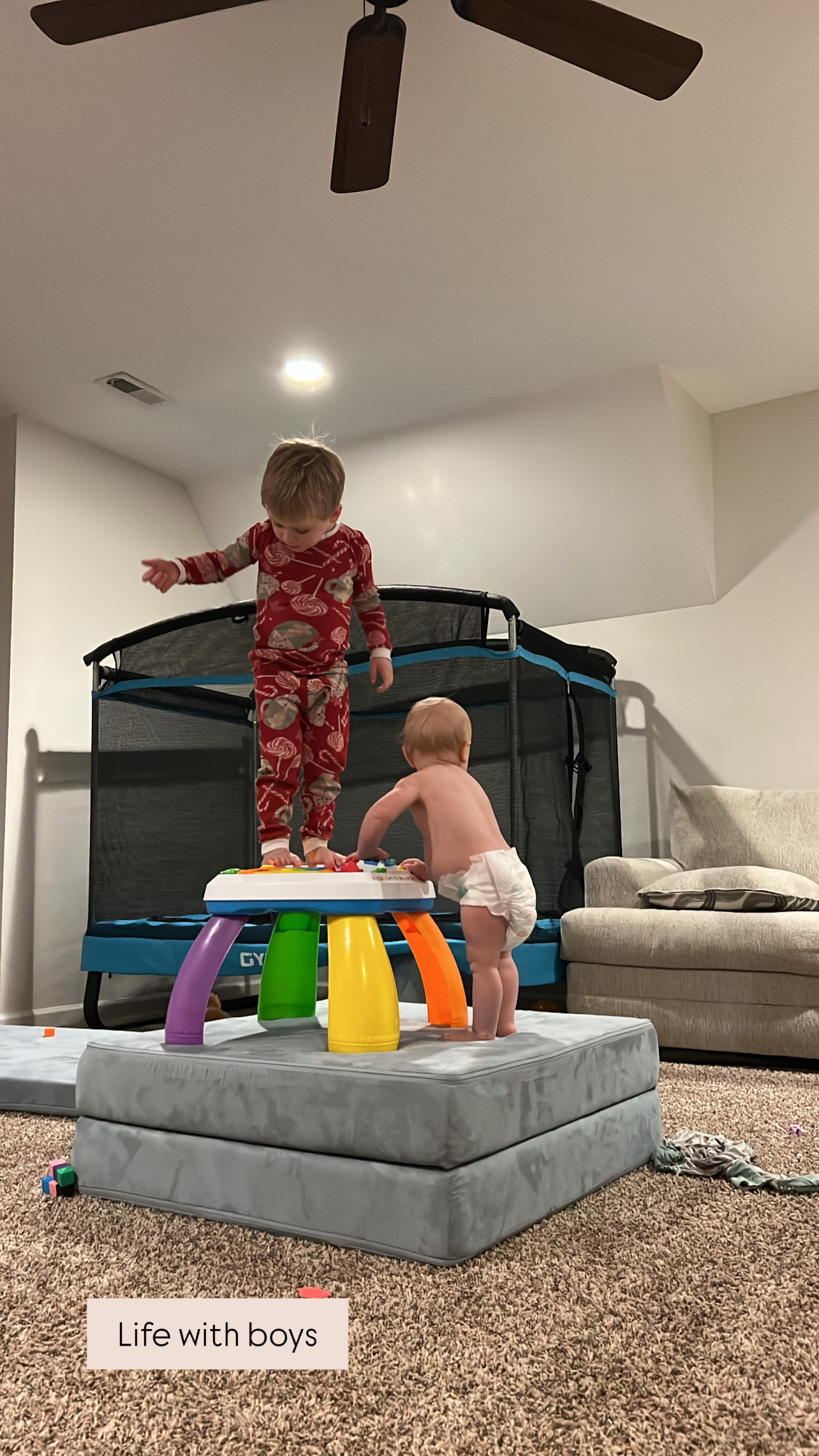
On colder days, we pivot. Sometimes we head to an open gym at a local gymnastics facility. Other days, we turn on music and they jump on our indoor trampoline or run an obstacle course in the playroom. When they’ve moved, the rest of the day goes better.
4. Predictable Nap Times and Reading Before Rest
We protect nap time. Same window most days. Same wind-down rhythm. After lunch, we gather with a big stack of library books and read together before everyone heads to their rooms. Reading is the bridge from chaos to quiet.
Every few weeks, I rotate our books by placing holds at the library using themed Pinterest lists: seasons, character traits, holidays, whatever we’re exploring or needing to reinforce.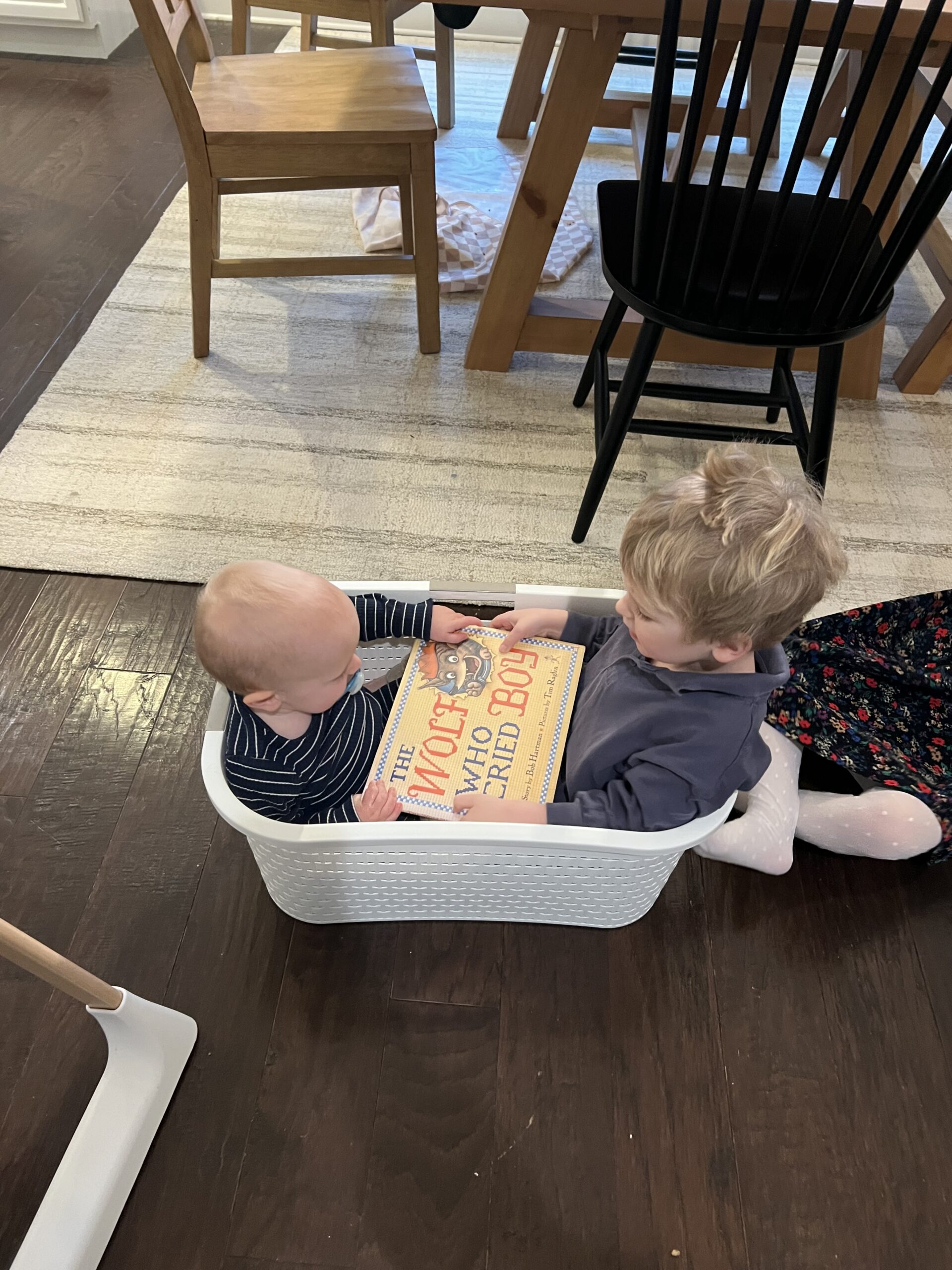
Protecting rest has always been important to our family. My two-year-old and one-year-old both nap, while my four-year-old typically does quiet playtime in her room.
5. Preparing the Night Before
Some of the calm comes the night before. Laying out clothes, shoes by the door, prepping breakfast, and packing lunches for outings, removes morning friction and gives the day a smoother start. It’s a small step, but it saves a lot of mental energy, for me and the kids. It’s really about treating stay-at-home mom life like the job it is, and prepping accordingly.
I’m still drowning in laundry and a messy house, but these small, predictable anchors — checklists, gym time, daily activity, reading and naps, and prepping the night before — have made a noticeable difference. The kids still have plenty of time for free-play, it just falls in a more predictable flow. This approach makes the chaos easier to navigate, and I have more mental energy to help my kids regulate.