








(Disclaimer: this is solely my story. There are many different kinds of breast cancers and treatment plans. I am not a medical professional, just a cancer patient telling her personal story, a story that isn’t complete just yet.)
“I’m sorry to tell you this, but it is in fact cancer,” said the radiologist.
People who’ve gotten a cancer diagnosis can probably tell you all about the exact moment they got the diagnosis and the immediate thoughts that rushed through their head. Honestly, I can tell you where I was sitting when I got the call, but I don’t have a profound “moment” story to tell you. Looking back, I’m not sure why my husband didn’t question my sanity. I was stoic, like I had just received information that I already knew and showed no emotions toward it. I just needed a game plan.
To understand how I got here, I want to rewind a few weeks prior to getting this diagnosis.
It truly came out of nowhere. I was getting undressed to shower and when I removed my bra, a chunk of skin ripped off. (I can only compare it to when you’re in the midst of breastfeeding and your wet nipple dries to your bra and at the next feeding, you rip off that skin.) It burned and throbbed, but I attributed it to a particular sports bra or friction during a run. I put a bandaid on it and let it heal. A week later, it happened again. I thought, “Hm…maybe it wasn’t fully healed and it was the fabric of that bra.” So, on went another bandaid. I hate to admit it, but this happened four times. I kept coming up with a reason why it happened. That fourth time was my breaking point. It was insanely aggravating and painful.
That Friday morning, I sat in bed and down the Google rabbit hole I went. I soon realized that it had to be discharge from my nipple drying to my bra. I never saw discharge. It was never “oozing” or dripping. Had the skin not gotten ripped off, I would never have realized it.
My nipple literally saved my life.
Along my rabbit hole, I quickly came to realize that this could be breast cancer. But, if you’ve ever Googled anything, you’re always dying based on the results. This was the first time I can confirm that Google’s “worst case scenario” was helpful. I started reading personal stories from other women as I decided who I needed to call. Do I need a dermatologist for a skin biopsy, a family medicine doctor, a gynecologist? Based on what I had read, women in similar situations were directed to a dermatologist.
Luckily, a close friend is a dermatologist, so a few minutes later, he was telling me that it’s probably a common skin issue and to put a steroid cream on it and cover it. Easy-peasy. I was 38 years old, so breast cancer wasn’t the first thought. I wasn’t in the age range for preventative mammograms and had no reason to have ever had one.
According to Google, risk factors for breast cancer include:
- Gender and Age: Being female is the primary risk factor, with risk rising significantly after age 50. I am female, but under age 50.
- Genetic Mutations: Inherited mutations, specifically BRCA1 and BRCA2, account for 5-10% of cases. My genetic testing came back negative.
- Family and Personal History: A first-degree relative (parent, sibling, child) with breast cancer doubles or triples the risk. A personal history of certain benign breast conditions (e.g., atypical hyperplasia) or prior breast cancer increases risk. I do not have a first-degree relative with breast cancer history.
- Reproductive History: Early menstruation (before 12) or late menopause (after 55) increases lifetime exposure to estrogen. I did not have early menstruation and have not hit menopause.
- Breast Density: Dense breasts contain more glandular tissue than fat, making cancers harder to detect and increasing risk. I do have dense breast tissue, but did not know this until my first mammogram.
- Radiation Exposure: Previous radiation treatment to the chest, especially before age 30, increases risk. I did not have previous radiation to my chest.
Two days later, the pain from my nipple was radiating and throbbing. I stopped the cream that day. I am so glad to have tried this before escalating the situation. Once the cream didn’t work, it was easy to realize there was something bigger at play. The next morning, Monday, I was so frustrated with my boob situation that I started feeling around. I knew there had to be something going on. Sure enough, I felt a lump. I got in the car right away and drove straight to my husband’s clinic to make him feel it because I thought I was going crazy.
My husband is always calm and collected. Everything is usually “fine.” BUT, he immediately sprung into action, tagging in a female physician at that moment.
I went from finding a lump on Monday, to a mammogram and ultrasound within 48 hours, a biopsy three days after that, and a diagnosis on Friday.
The following week, I met with my oncologist and surgeon. The next week I had my port-a-cath placed and started chemotherapy.
I didn’t have time to process what was happening. I hit the ground running and didn’t stop to look around or catch my breath.
I know that this is not the norm in the world of healthcare. I cannot thank my husband and his colleague enough for what the next two weeks held for me. There are a lot of “everything happens for a reason” moments in this story, but at the end of the day, I am forever grateful for being right where we were in that moment.
I was able to get an appointment at Mosaic Breast Imaging in Knoxville. The entire experience was 10/10, despite the results of the imaging of course. They started with a mammogram; the tech was so nice and reassuring. It was not painful in any way. The radiologist, Dr. Forsberg, read the mammogram immediately and then you are either told you can go home because all is well, or you get walked across the hall to the ultrasound room (the tech told me that if you have dense breast tissue, you are pretty much assured an ultrasound even if you don’t have anything concerning). Dr. Forsberg read the ultrasound and then came in and talked to me about his findings. He was able to book a biopsy the very next day. He personally called me the following afternoon with the biopsy results.
My type of breast cancer is Invasive Ductal Carcinoma, stage 2b her2+, er/pr negative. My cancer cells were grade 3, meaning it was an aggressive cancer. Thankfully, after all the imaging, it was confirmed that it had not metastasized to my lymph nodes or any other part of my body. The reason my cancer was staged at 2b was due to the size of my tumor. Anything over 2cm is stage 2, with my tumor measuring a total of 9.5cm.
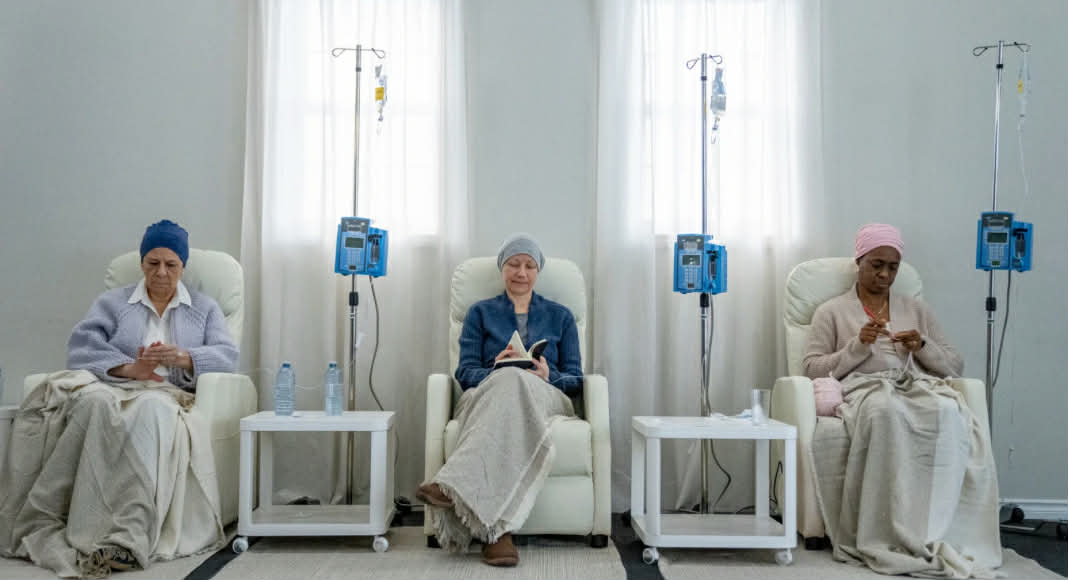
My treatment plan was immediately put into action by my oncologist, which included six rounds of chemotherapy consisting of Carboplatin, Taxotere, and Phesgo which consists of two targeted therapies, Perjeta and Herceptin. I did the Phesgo injection at my first round of chemo, but it’s a pretty painful injection. It’s a slow push and a nurse slowly injects in your thigh for 20 minutes for the first dose (15 minutes for subsequent doses). The injection burned. I want to say I tolerate pain pretty well, but I made the decision to switch to get Perjeta and Herception as an infusion through my port. Another injection, Neulasta, was given 24 hours after treatment in the back of my upper arm to help my body make more white blood cells to help protect from infection. This injection caught me off guard; the back of the arm isn’t the most pleasant place for an injection.
The list of side effects of each drug is lengthy and frankly, are all terrifying and miserable. The side effects seemed to tag in and out; the nausea was the first and it came usually day three post chemo. It knocked me out that first round. I remember sitting on my couch, feeling like a legit zombie and I remember thinking, “There’s no way I can do this five more times.” I learned ways to deal with symptoms over time, but chemo tends to build on itself for fatigue. Round four was the roughest for me, mentally and physically. I was mentally drained and just wanted to be better, but knew I still had two more rounds to go. I was exhausted and the GI issues hit the hardest. I was dehydrated and so incredibly tired.
Constant, unrelenting nausea in the back of your throat for days on end. I took Zofran, used Sancuso patches after trying Zofran, and took Compazine. There was still nausea that presented itself every day for 7-10 days post treatment. About three days post treatment, the bone pain would hit. I had the most pain in my shoulders and neck; it hurt to lean back on the couch pillows. Everything was so tender. Mouth sores can also develop after treatment. Thankfully, I did not experience actual sores, but my tongue was raw (it felt like I had eaten a huge bag of Sour Patch Kids). This was the worst after the first round, but for a month or two, I had to avoid hot foods and drinks. Then the GI issues would hit. Most rounds had painful constipation followed by intense diarrhea. Nosebleeds would start out of nowhere. Then dry, flaky, tight facial skin would be the last bad side effect.
By the time the next treatment was happening, my skin was flawless, almost like an intense chemical peel of sorts. I usually had my energy back and felt back to normal during the last few days prior to the next treatment.
I decided to shave my head after my first round of chemo. I was told my hair would start to fall out about 10-14 days after the first treatment. I wanted to be in control of something and shaving my head gave me the mindset that I was taking away my hair, rather than the cancer doing so. After the second round of chemo, I saw the most hair falling out. I shaved my head but still had hair, just very, very short. I remember being in the shower and my face and hands were caked with little hairs. My head was really tender when I started losing hair. I used a hair towel (even though I didn’t need it for my hair, per se), but my bath towel would be caked in the little hairs. I wasn’t really sad about losing my hair, but it just really grossed me out during this part. I can’t imagine losing big, long clumps of hair, so I am really glad I got ahead of it before it happened.
Another side effect that I experienced is temporary menopause (it can also kick you into early menopause). I was told that my periods could get worse OR stop during treatment. (Those are two extremes, but welcome to cancer treatment!) I had one period during treatment, after my second round of chemo and it was much heavier than usual. After this period, I did not have any other periods during chemo treatments. Due to the lack of periods and the introduction to hot flashes and night sweats, I believe I’ve experienced temporary menopause. Time will tell if it is permanent.
I had my annual gynecological visit (with breast exam) at the end of February 2025, ran a half marathon in May, and was diagnosed with stage 2b cancer in September. I entered cancer treatment the fittest and most active I had ever been.
I continued to workout during treatment. I wasn’t training for a marathon or anything crazy, but I rode my Peloton bike, walked on the treadmill or took walks at the park. I tried to be active almost every day, but there were days where it wasn’t happening. And I was okay with that. Staying active helped me feel strong, physically and mentally. I could get a good sweat in and have good output numbers on the workout and it would be the bright spot in my day. Working out was one of my favorite parts of my days during the treatment period.
I think working out helped me persevere through treatment. It kept me strong, gave me time where I wasn’t feeling sorry for myself sitting on the couch, and kept my heart strong. I didn’t wither away with weight loss. I lost some muscle for sure, but I am so thankful I kept moving.
I want to share my story because the prevalence of breast cancer in women under the age of 40 (when preventative care starts to be recommended), is way higher than I ever imagined. I always was told to look for lumps, and to be fair, I didn’t do self breast exams regularly. But, I had no idea that my nipple change was a symptom. Had I known that, I probably wouldn’t have come up with an excuse for three straight weeks.
At this time, I have completed six rounds of chemotherapy. I will continue targeted therapy for HER2+ breast cancer for twelve more rounds, every three weeks. Last month, I had a double mastectomy, with an attempt to keep my nipples. The day of the surgery I had to arrive early to the breast center to have an injection into my nipple for sentinel node mapping. During this injection, a radioactive tracer/blue dye is injected to help the surgeon locate the sentinel node which will show if the cancer has spread. My surgeon prescribed EMLA cream to apply to the nipple and areola prior to the injection to help numb the area. I will admit I had the most anxiety about this injection. In the end, it was uncomfortable but tolerable.
A little less than a week after the double mastectomy, I received the pathology from my breast tissue.
It was determined that I had a “pathological complete response” to the chemo, meaning there were zero cancer cells found remaining in the tissue that was removed. This was huge news because it took the need for radiation off the table. If my tumor was still larger than 5cm, I would have had to have radiation. If I still had active cancer cells remaining, the treatment plan could have also changed, adding another chemotherapy drug.
After meeting with the plastic surgeon before the mastectomy, I learned that each step of surgery comes with a list of complications. I had expanders placed during the mastectomy that will get filled with saline over time until I reach the desired size of my choosing. I left the hospital after the double mastectomy with four drains coming from my chest. These drains are called Jackson-Pratt (JP) drains. You are asked to “strip” these drains twice a day and document the amount of fluid from each drain. After one week, I was able to have two of the drains removed, with the final two drains removed two weeks post-op.
After surgery, I did not wear compression for a week, per the plastic surgeon, to help blood flow to my nipples. Nipple sparing mastectomies run the risk of the nipples not having enough blood flow after surgery and the nipples can die resulting in the removal of the dead skin during another surgery. After that first week, I was given a compression binder to help with swelling that I was required to wear 24/7 for several weeks.
At the time of writing, I have started the filling process of the expanders. I have been given the choice of how often I get them filled: each week, every two weeks, etc. I will keep the expanders for at least six weeks after reaching the desired size before silicone implants can be placed during another surgery. The expanders have a magnetic “port” where the injection is placed to insert the saline solution into the expander. I was a bit nervous about this process, but due to the surgery, my chest is still completely numb. I did not feel the injection on either side.
Having spent 25+ years with a decent sized chest, it’s been pretty cool getting to experience a small chest for a while. I know that my goal is to go with a smaller size chest than what I had and I am quite excited for that. I am a bit nervous in choosing the size as I don’t want to go too small or too big.
I am proud of how I handled the last six months and the way I tolerated chemo, but I will admit I hope to never have to go through it again.
If you are facing a cancer diagnosis, you can and will do it. You’ll have bad days, tired days, and anxious days. But, you’ll also have good days, happy days, and calm days. Take it one day at a time. Find things that bring you joy, and eat the foods that you can tolerate and bring you happiness. Protect yourself as much as you can from germs and sickness. I felt like I was back to Covid days with my mindset. I would ask myself “If I got sick from going to/doing ____, would it be worth it?”









God bless you Stephanie! You have faced that damn cancer head on with grace and courage! Knowing your background, I know what those words had to mean to you when you heard them. You swallowed the fear, tossed your hair back, held your head up and said ‘what do we do now, let’s get this show in the road!’ You’ve got great support with Brandon, Liz, Dee and the Knoxville Moms…. Use them! Know that the rest of your family thinks of you often and prays for your continued recovery! Your article was fantastic! Loved hearing about your discovery and journey as much as I hated hearing about your cancer diagnosis! Take care of yourself and stay on top of things! Love you and praying for you!
Thank you so much for sharing your story, and I’m so glad you were able to move forward quickly especially since it’s an aggressive one. Keeping you in our thoughts as you heal and continue on this journey!