









 Have you ever struggled to get to sleep? I know I have. And what’s that common bit of advice people share to help you get to sleep? Counting sheep.
There are plenty of old cartoons featuring the scene. For whatever reason it’s always the same setup. An endless array of cartoon sheep leap over a fence in a pasture surrounded by a thought-bubble from the character who’s struggling to sleep.

I never really thought much about that until I got old enough to realize there are people who can actually visualize that pasture with its picket fence and fluffy sheep jumping the fence. I always thought the advice and the cartoons had no actual value and were outdated. Why? Because I don’t visualize the way other people do.
In fact, I don’t really visualize at all.
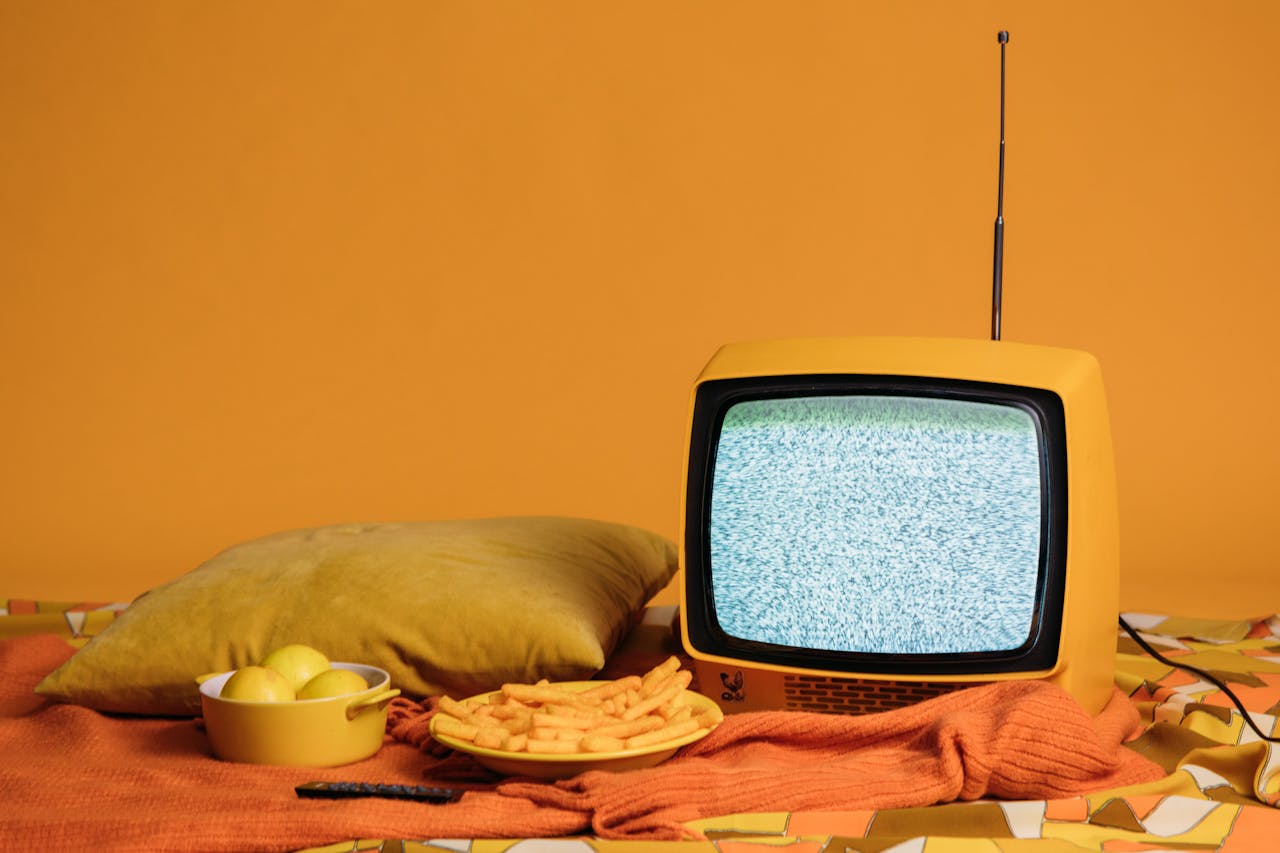
If I could project what’s inside my brain onto a screen for other people to see, it would be a very dreary and boring scene indeed. The “screen” of my internal thoughts is basically a black screen, sometimes with words scrolling across the way a Star Wars intro moves.
Aphantasia is the inability to visualize, and up until a few years ago, I always just assumed my lack of mental imagery was just a random quirk. If I was asked to picture something, I could probably tell you a general idea of the thing or scene because I love reading and can generally create word pictures without being able to see them myself. But I’m not picturing a scene in my head.
When I read a book, I can’t see the characters or the world an author created. Give me some Tolkien-esque descriptions and I can glaze over really fast because the descriptions mean nothing to me as far as bringing visuals to my mind. In fact, I adored the Lord of the Rings movies primarily because they gave visuals to a world I’d read about and now could understand more of what Tolkien was creating. Sure, the movies might not be true to the text, but for someone who didn’t have any mental images, it was really amazing to see these places come to life.
If you ask me to describe something, I can do it. I can describe things I know well and give you details, but it’s because those details are catalogued in my brain and not because I can see them in my head as I’m describing my child or my kitchen or any other random thing. But tell me not to think about a pink elephant, and I can also do that. At the most, I’m thinking of the words “pink elephant” flashing across my brain. I’m not picturing Dumbo in a pink tutu or even a real elephant painted pink.
So is aphantasia just a really unfortunate way of life for those of us who don’t visualize? Well, like anything there are pros and cons to this lack of mental imagery.
On the cons side, aphantasia sometimes impacts my ability to recall memories. Though even this can be its own kind of pro as I don’t re-experience traumatic memories the way some people do, and as a result, I don’t usually even experience the same level of emotional tumult when remembering something sad. But I do sometimes struggle to remember memories with the same level of richness and detail that other people do, and I’ve forgotten things that my husband or parents remember much better than I do.
But here’s a pro to aphantasia I’ve always found secretly amusing. I never think of people having sex. It simply does not bother me to think of two people having sex the way it seems to bother others. At most, if I think of a couple having sex, I’m literally seeing the names of the couple with the word “sex” between them like some weird mathematical equation.
Another potential con? Whenever people give the sage advice to “imagine the audience in their underwear” or some variant of that for public speaking, I see…you guessed it. Nothing. But on the bright side, if you’re ever in an audience I’m speaking to, just know I won’t be picturing you in your underwear to bolster my courage!
Aphantasia is a spectrum, and the fascinating thing is it can affect not just visualization but also a person’s ability to imagine other senses like touch, sound, and taste. It’s not something that’s fully understood, but there are people out there without the ability to imagine any senses, which is called multisensory aphantasia.
As I’ve explored aphantasia and what it means to me, it’s opened my eyes to some fascinating differences in how I experience the world around me. In a future post, I want to explore some of those other differences and in particular how imagination works for people with aphantasia.