









 If you’ve been following along for a while, you may have noticed that about once a year I write what’s quickly becoming my annual post on sports. It’s always in the fall because…football…and basketball…and then soccer in the spring. My boys love sports, and I could go on and on about the comradery of a team and the benefits of learning to do hard things.
Yet, as each season comes to a close, I’m left with the same lingering thought: Are we doing youth sports wrong?
Before I offend too many people, let’s clarify a few things here. First, when I say “youth sports,” I am specifically speaking of elementary school years, anywhere from 5 to 11 years old. I also want to clarify that I love competition and support a healthy amount in all realms of sports. There’s a lot to be learned from winning and losing. I’m not suggesting that we throw out the baby with the bathwater.

I’m just asking that we consider this for a moment. What are we teaching our elementary students when we sign them up for a team and they spend an entire game on a bench? (I’m looking at you, Rec League Football.) When do they learn to play – actually play – the game if we’re benching them at seven-years-old? At what point do they learn how to love the game? And how do we teach our coaches to develop their players rather than simply focusing on the ones that seem to have naturally come with that aptitude? Can our coaches really fill their roles appropriately for this age if they’re being pressured to win by tournaments, brackets, and banners.
Competition is not the enemy, but if it’s our sole focus, we’re losing out on a lot with elementary sports.
What then should be our focus?
1. Elementary sports should be the place where we are training athletes.
There is a vast difference between an athlete and a talented player. Talented players are a dime a dozen. Take for example a basketball game where my oldest son sat on the bench and watched his team fight for the victory. In the last few seconds, a kid from the other team scored a three point shot and won the game. My son’s team was devastated. They hadn’t won very many games that year, and this one had been so close. One of the players, arguably our most talented player, refused to slap hands and congratulate the other team. In one of the most blatant displays of unsportsmanlike conduct that I have seen, he turned away and walked to the locker room.
That night, that kid was no athlete. He was talented, yes, but lacked the athlete’s mindset of resilience and grit. I don’t think it was all his fault. When competition is our main focus in elementary sports, sportsmanship often takes the back burner to talent. This should NEVER be the case, especially as we are beginning to train our young players. On our ride home that night, I had a very candid conversation with my son and let him know that the day I see that kind of conduct from him will be his last day playing basketball. I want him to be an athlete. That takes talent, hard work, resilience, grit, and learning how to win and lose gracefully.
2. Youth sports should be where young players learn the fundamentals of the game.
This means that we need coaches who not only yell at our players for messing up, they also need to be able to explain to the players where and how they messed up. A youth who consistently misses a free throw shot will be benefitted much more from explicit instruction on how to make the shot (hand and arm placement, ball spin, etc.) than they will be by shooting the same wrong shot over and over. If we want good middle and high school players, we need to create a system that will allow our coaches to teach the fundamentals in elementary sports, breaking each play down into its most basic form for players to learn and master. Initially, this will most likely be a setback. They won’t know the fancy plays or cool moves, but basic ball handling, taught over the course of three to four years would make a marked difference over time.
3. Above all else, youth sports should be where we teach our children to love the game.
I am under no false illusion that I am creating the next Peyton Manning or Stephen Curry. Chances of my children playing competitive sports after high school or college are slim. But I didn’t sign them up for sports for that. I want them to be active throughout their lives and find enjoyable ways to be healthy. In an increasingly stagnant society, I want my kids to love movement. It may never be their main source of income, but it could be a great, life-long form of exercise that they love. Sports can be a lifestyle.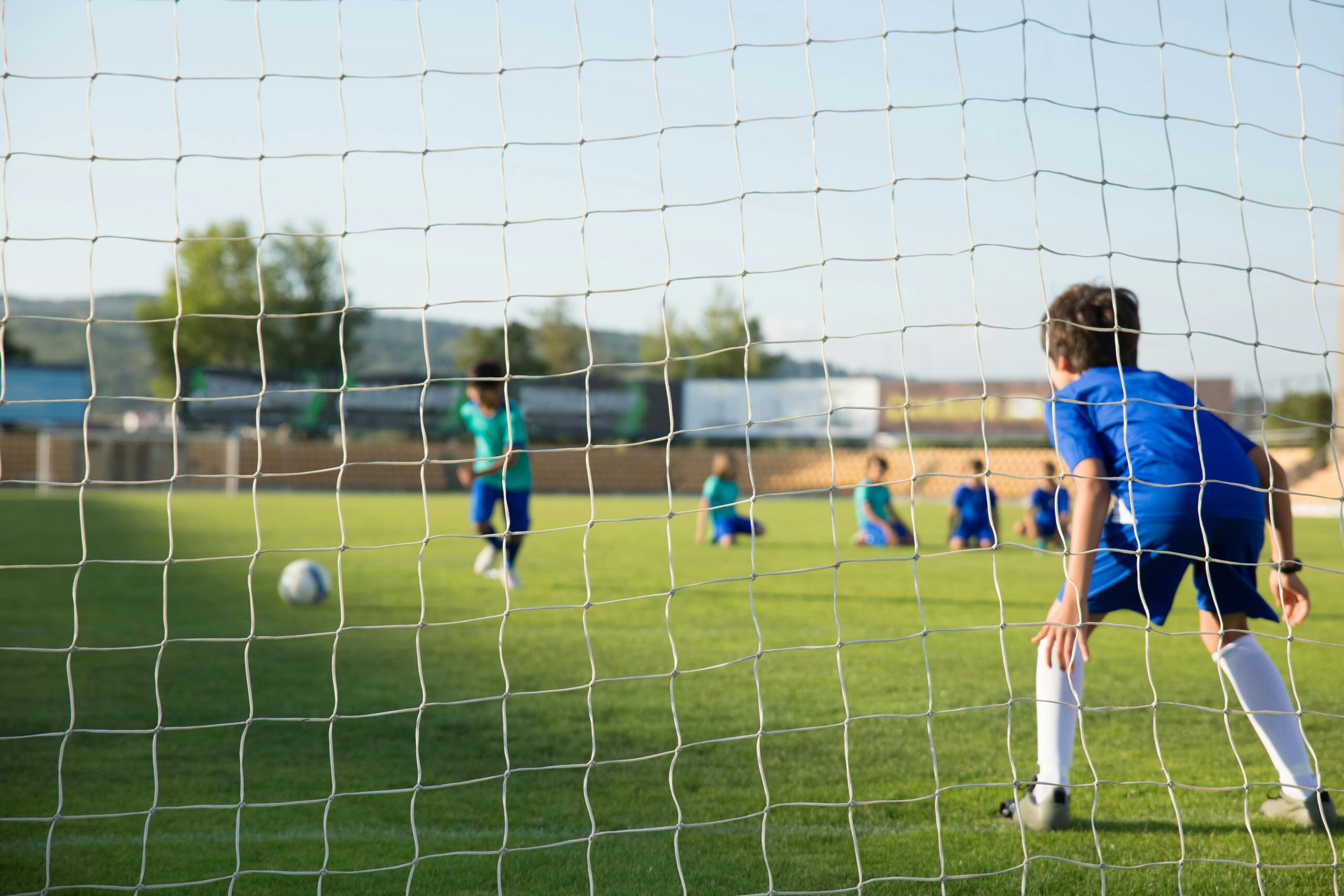
So what do we do? How do we create a system where our coaches can teach fundamentals and our elementary-aged children are not benched but able to learn new sports?
We need to stop tournaments in youth sports, specifically those that rank teams based on their wins and losses. From my view, these only add pressure on a coach for his team to perform at a certain level and leave less room for teaching.
We also need better trained coaches, which means that we need to offer greater incentives to our coaches. This past spring, I “volunteered” to coach my son’s soccer team, meaning that after receiving five or so emails about how he wouldn’t have a team if they didn’t get more coaches, I stepped up. I have zero experience playing soccer. My training was a background check, two soccer balls, a few cones, and a packet of papers that didn’t even cover all of the rules.
I loved my team. Those boys knew that they were wanted and important to our team, but that may be all that they learned. My frustration came a few games later while talking to one of the player’s dads. He pointed out multiple parents that played soccer well, one even playing competitively. I was dumbfounded. Why didn’t any of these parents volunteer? Some of it is time, but I also quickly found that there was little incentive to coach. We practiced 1-2 times per week and played once a week. For 3-4 hours of my time during an eight week period, I received a $20 picture. (I’m cheap and wouldn’t have bought the picture anyway. Haha.) How can we expect decent coaches for our children when there is no training and incentive to coach? I am not suggesting that we pay our rec team coaches a salary, but there should be something better than a $20 picture.